Guides
The reasoning behind the charts: how torque turns into clamp load, how threads are sized and tapped, how bearings are numbered and fitted, and how steel grades differ. Each guide links back to the exact numbers.
Bolt torque and tightening
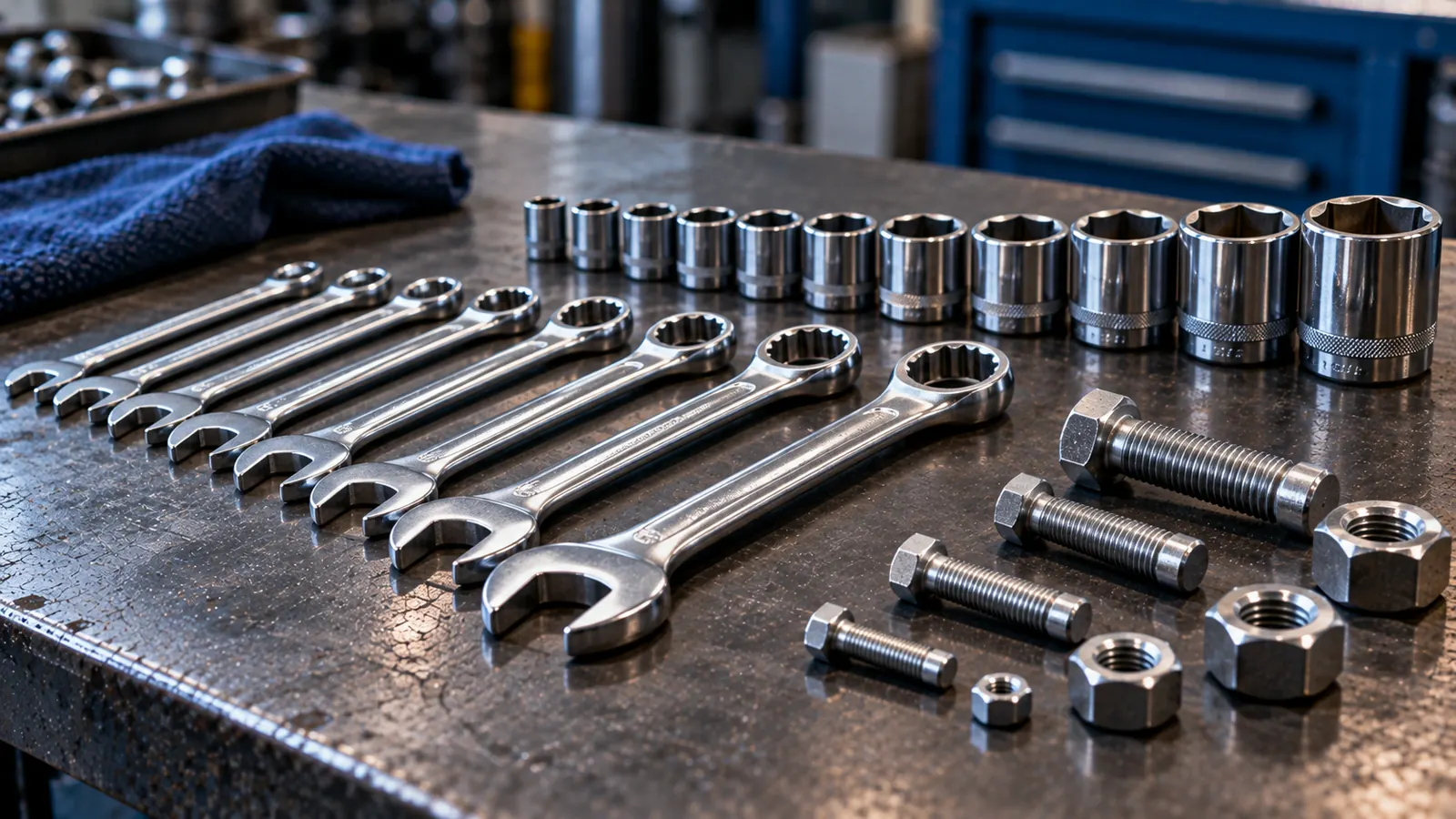 Bolt size chart with wrench and socket sizesThis bolt size chart gives the wrench for each bolt: M6 takes 10 mm, M8 13 mm, M10 16 mm (17 mm DIN), M12 18 mm (19 mm DIN); 1/4 in takes…
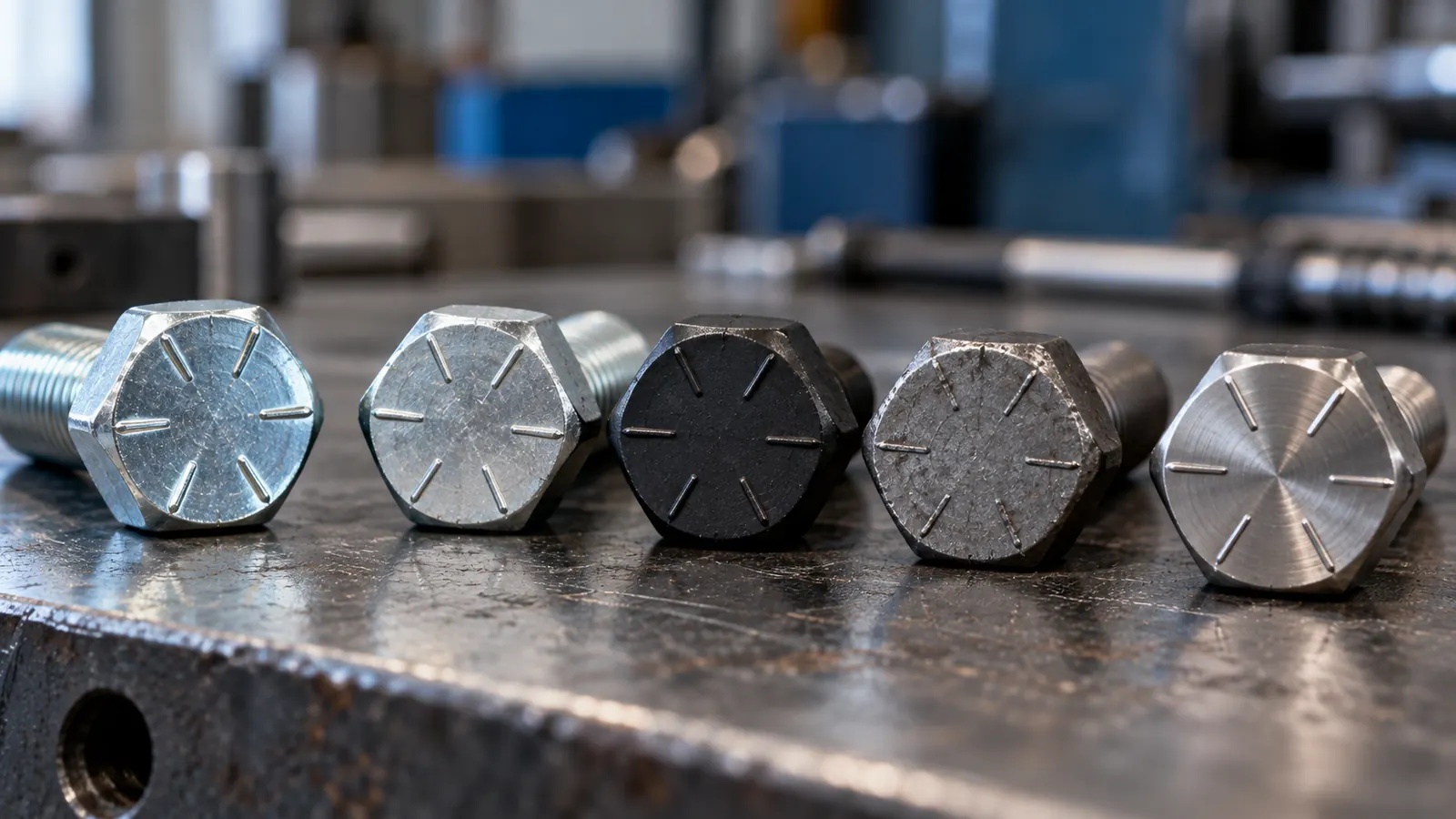 Bolt grades and head markingsBolt grades rate bolt strength. Inch bolts use SAE grades: no head marks is grade 2, 3 radial lines is grade 5 (120,000 psi tensile) and 6…
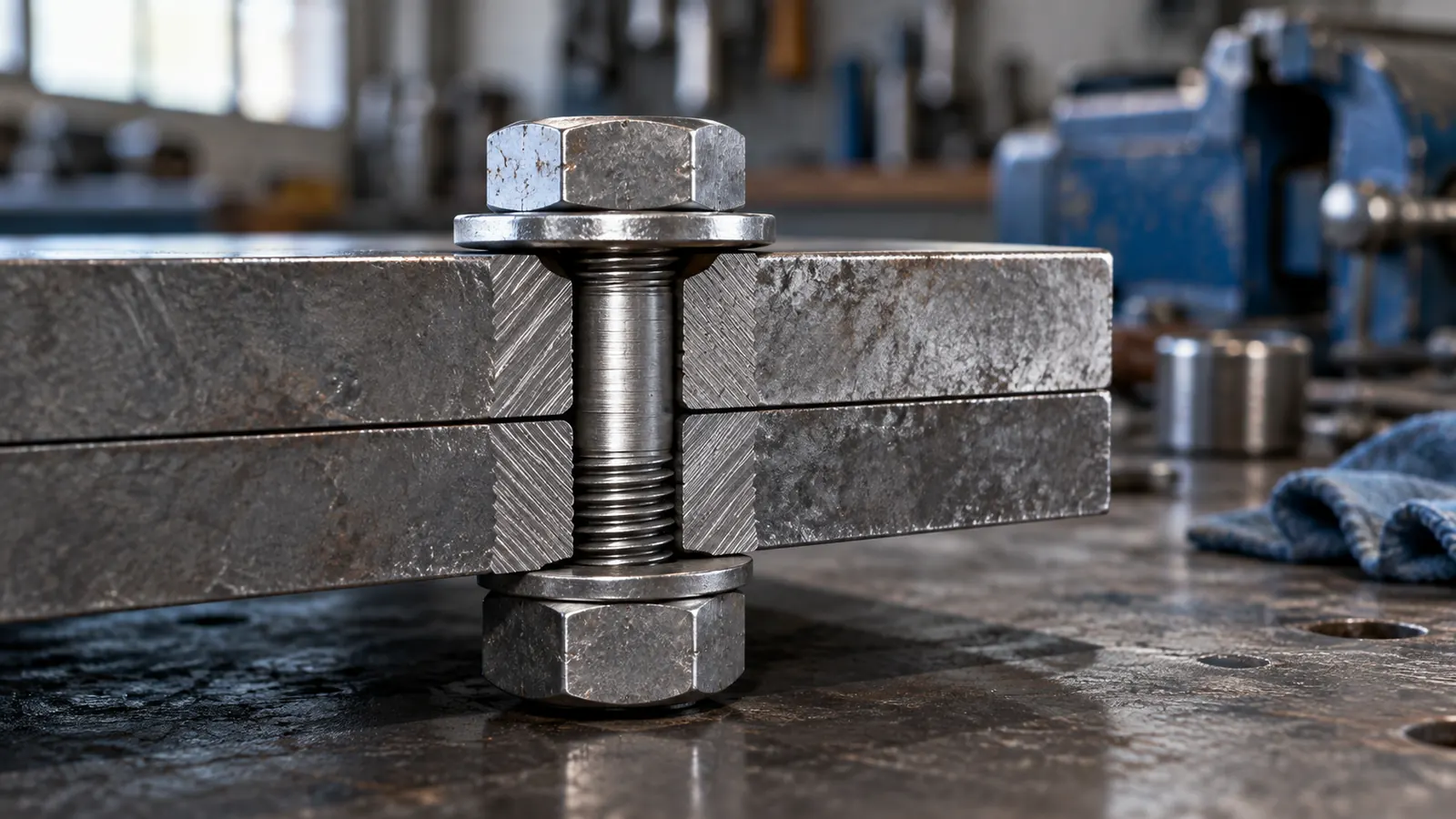 Bolt preload and clamp load explainedBolt preload is the tension in a bolt after tightening; it creates the clamp load that holds the joint together. The usual target is 75 %…
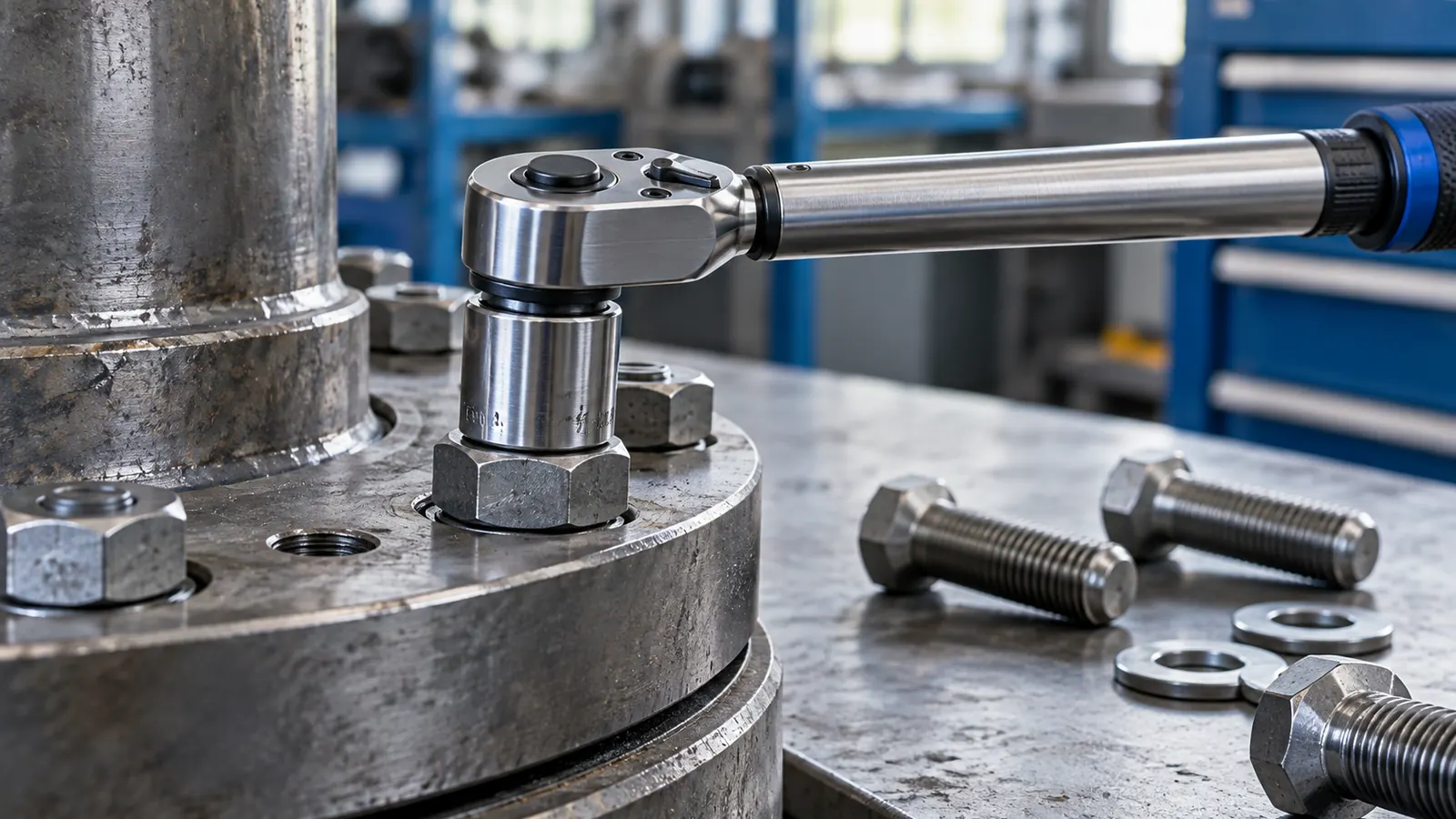 Bolt torque formula: T = K × F × dThe bolt torque formula is T = K × F × d: torque equals the nut factor K times the clamp load F times the nominal diameter d. With K = 0.20…
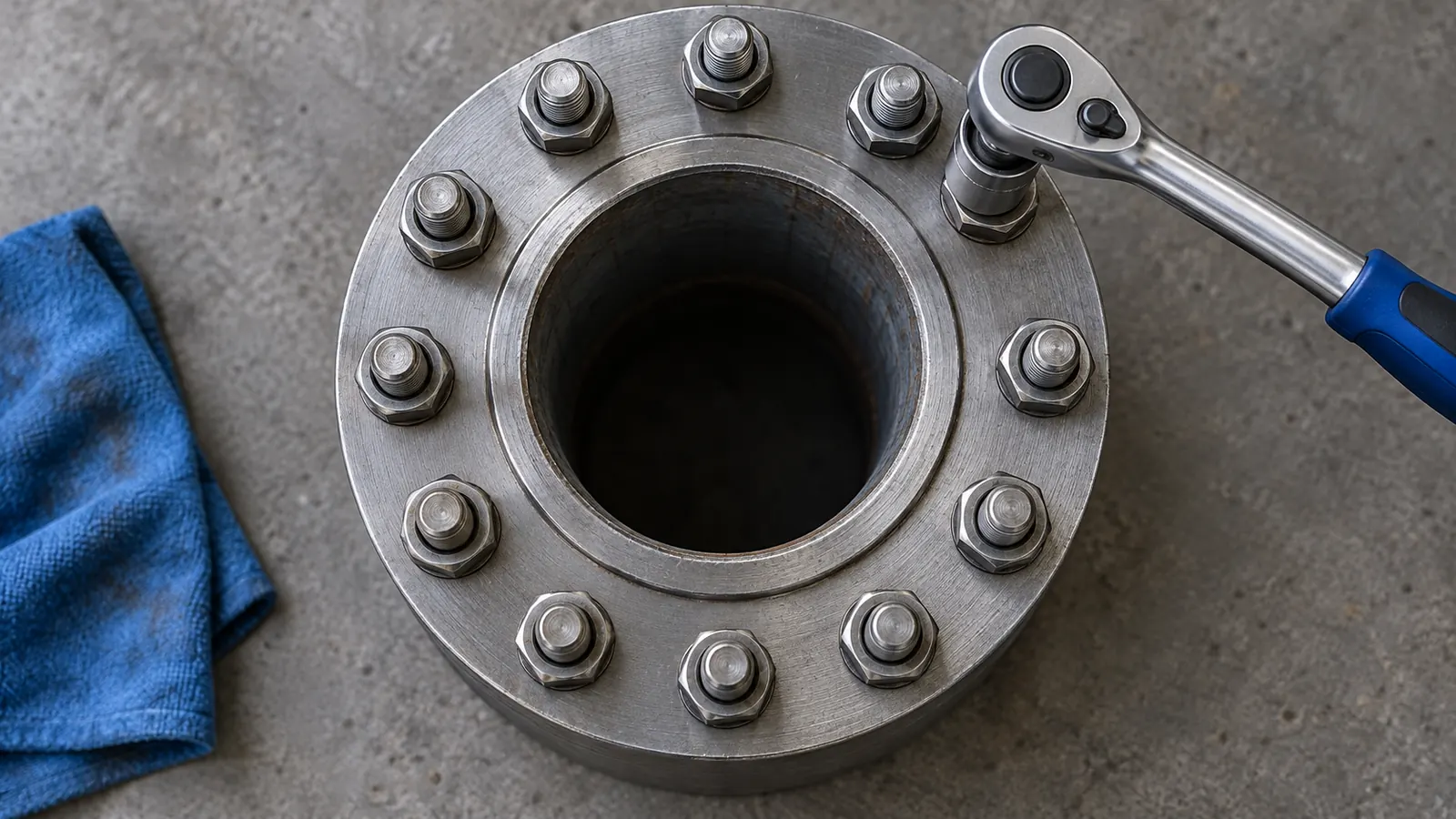 Bolt torque sequence and flange tightening patternsA bolt torque sequence tightens bolts in a star (criss-cross) pattern so the joint closes evenly: 1-3-2-4 for 4 bolts, 1-5-3-7-2-6-4-8 for…
 How to use a torque wrench correctlyHow to use a torque wrench: set the target torque, fit the socket square on the fastener, hold the handle at the grip mark and pull slowly…
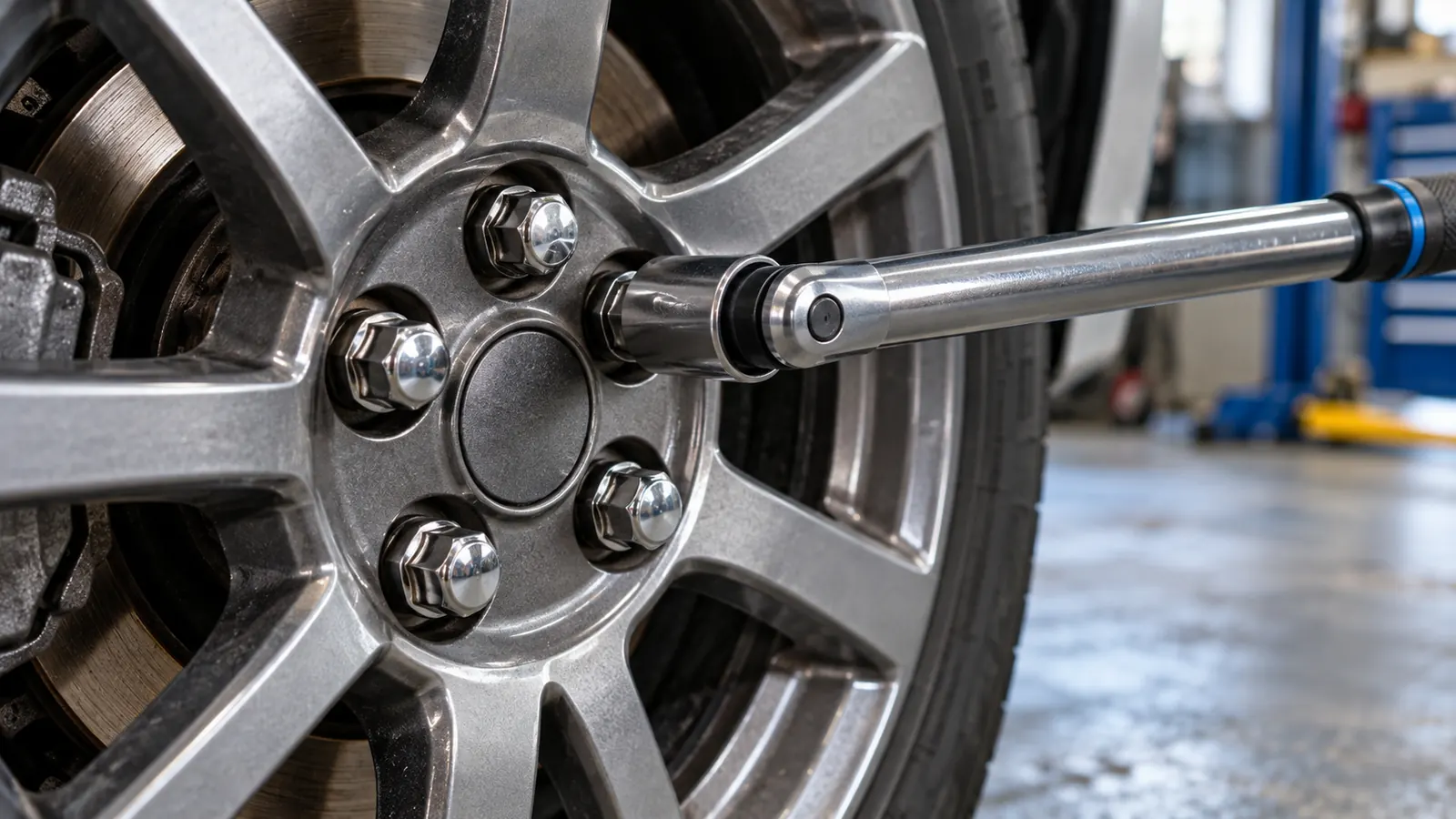 Lug nut torque chart and how to torque wheelsTypical lug nut torque is 65 to 80 ft-lb on M12 × 1.25 studs, 70 to 90 ft-lb on M12 × 1.5, 75 to 100 ft-lb on 1/2-20, and 120 to 165 ft-lb…
Threads and tapping
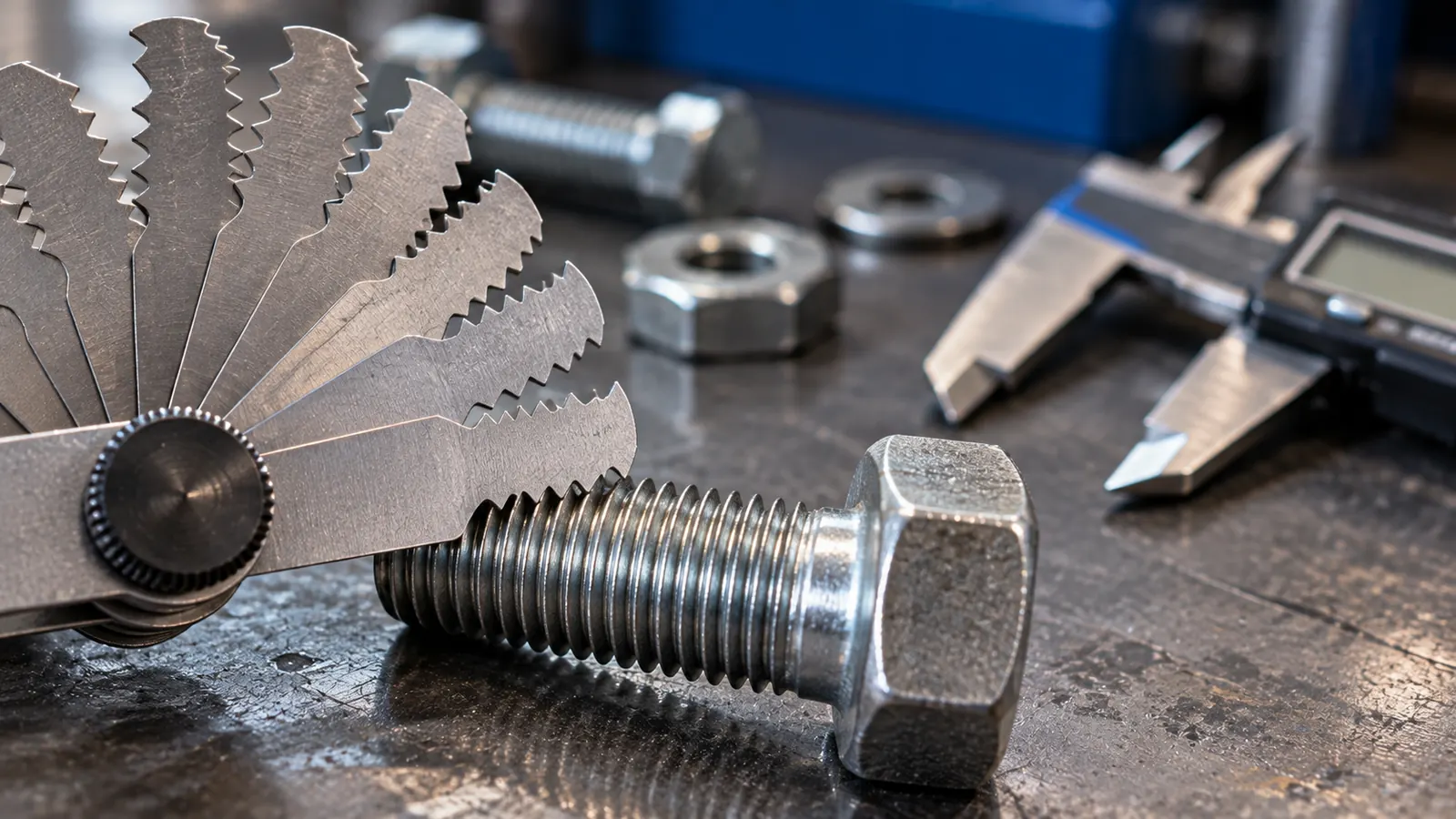 How to measure thread pitch and thread sizeTo measure thread pitch, press the leaves of a thread pitch gauge into the thread until one fits with no light showing and read its…
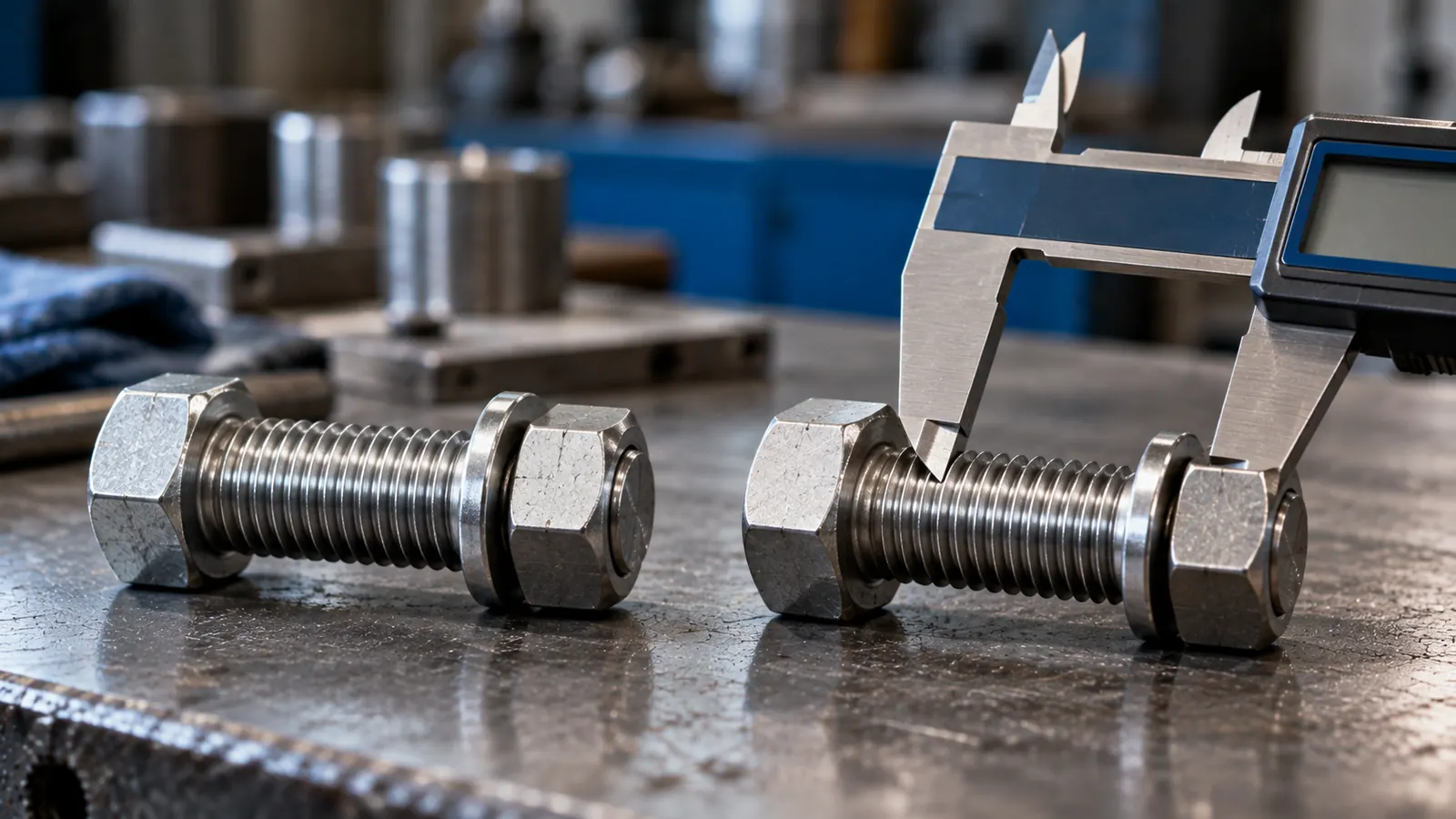 Metric vs imperial threads and metric to standard bolt conversionMetric and imperial (SAE) threads are not interchangeable. The nearest pairs are M5 and #10, M6 and 1/4 in, M8 and 5/16 in, M10 and 3/8 in,…
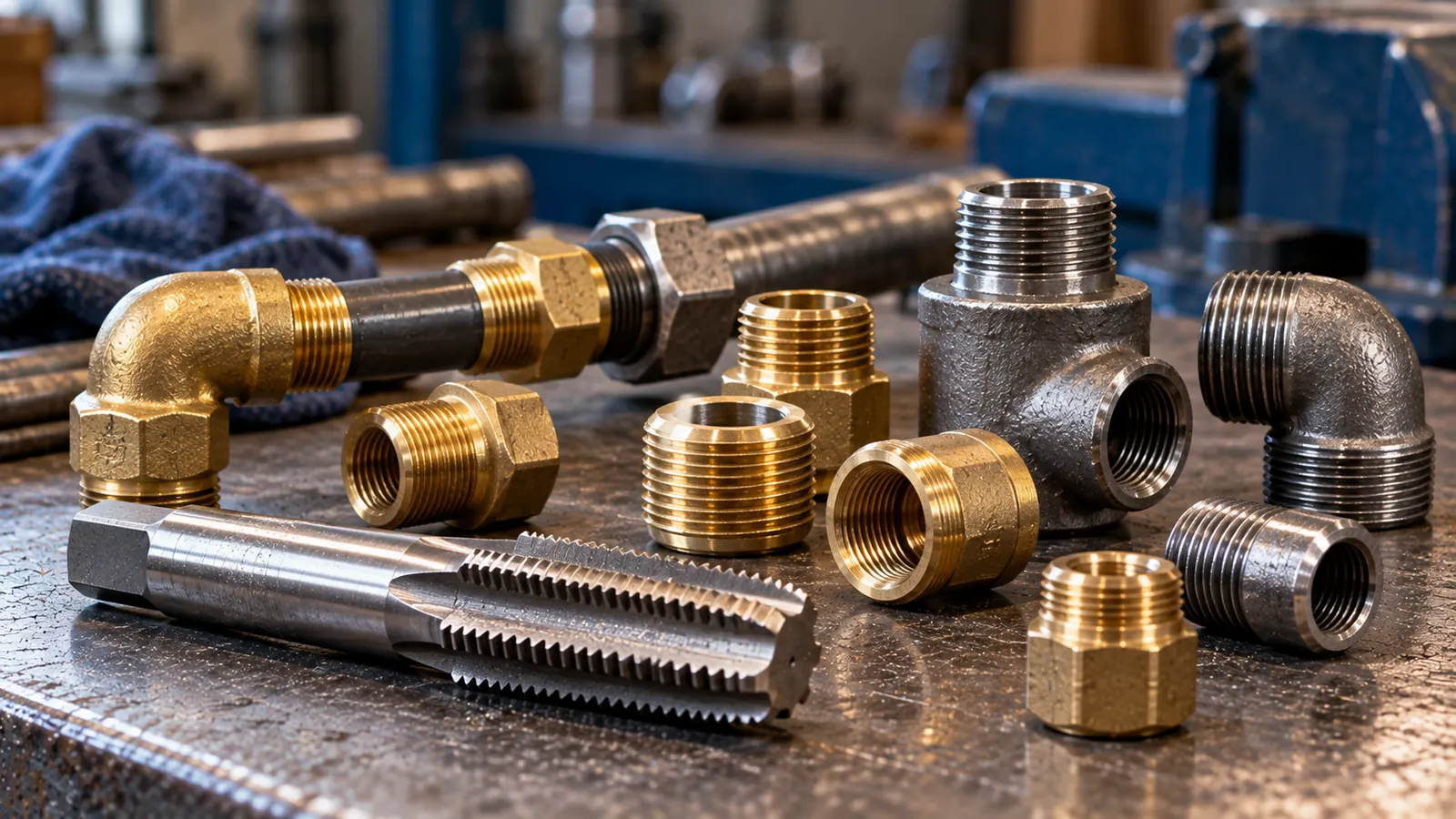 NPT tap drill sizes and NPT thread chartCommon NPT tap drill sizes without a reamer: 1/16 NPT 1/4 in, 1/8 NPT R (0.339 in), 1/4 NPT 7/16 in, 3/8 NPT 37/64 in, 1/2 NPT 23/32 in,…
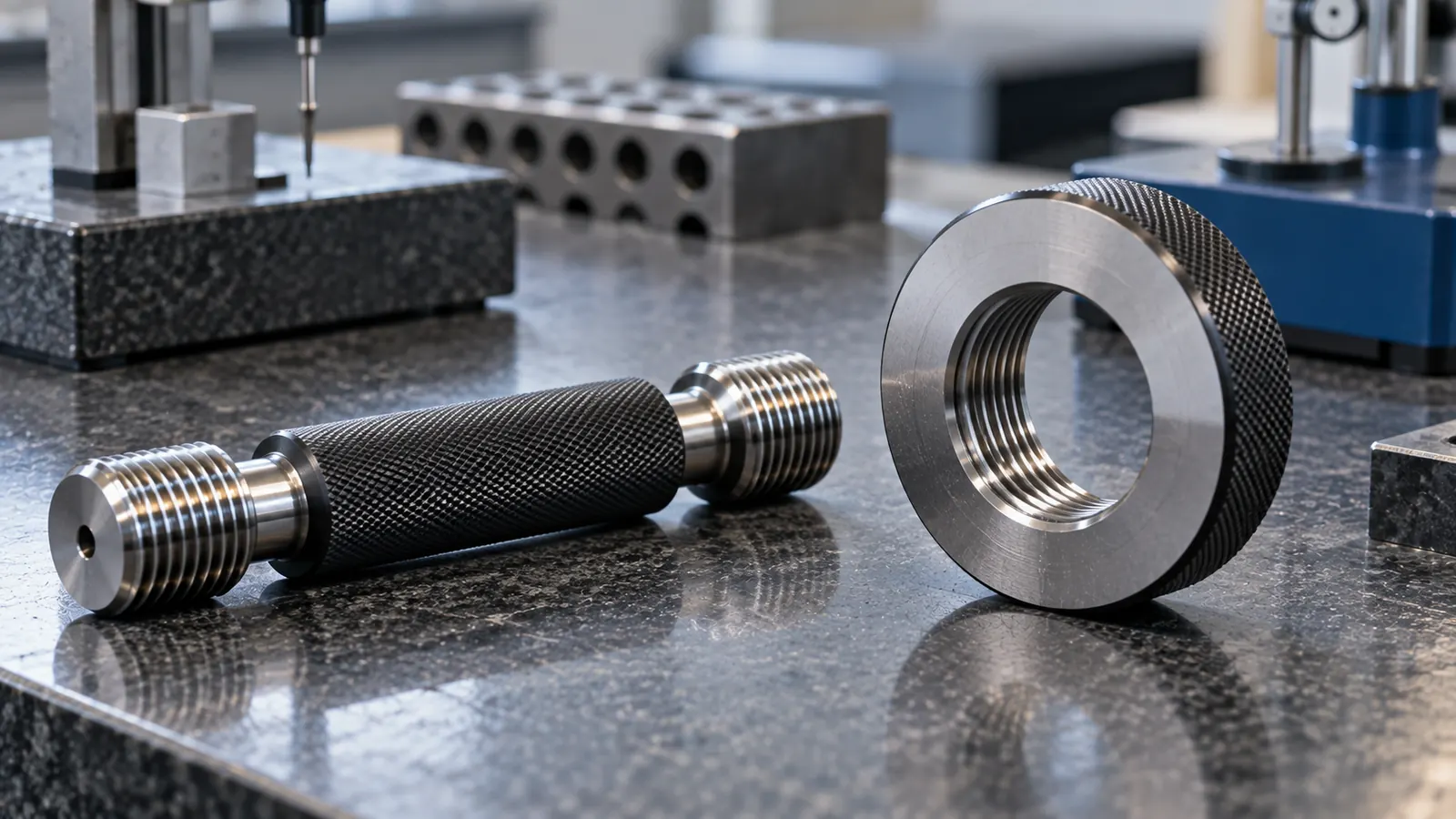 Thread classes and fits: 2A, 2B, 3A, 3B, 6g and 6HThread classes set the tolerance and allowance of a thread. Inch threads use 1A, 2A, 3A for bolts and 1B, 2B, 3B for holes; class 2A/2B is…
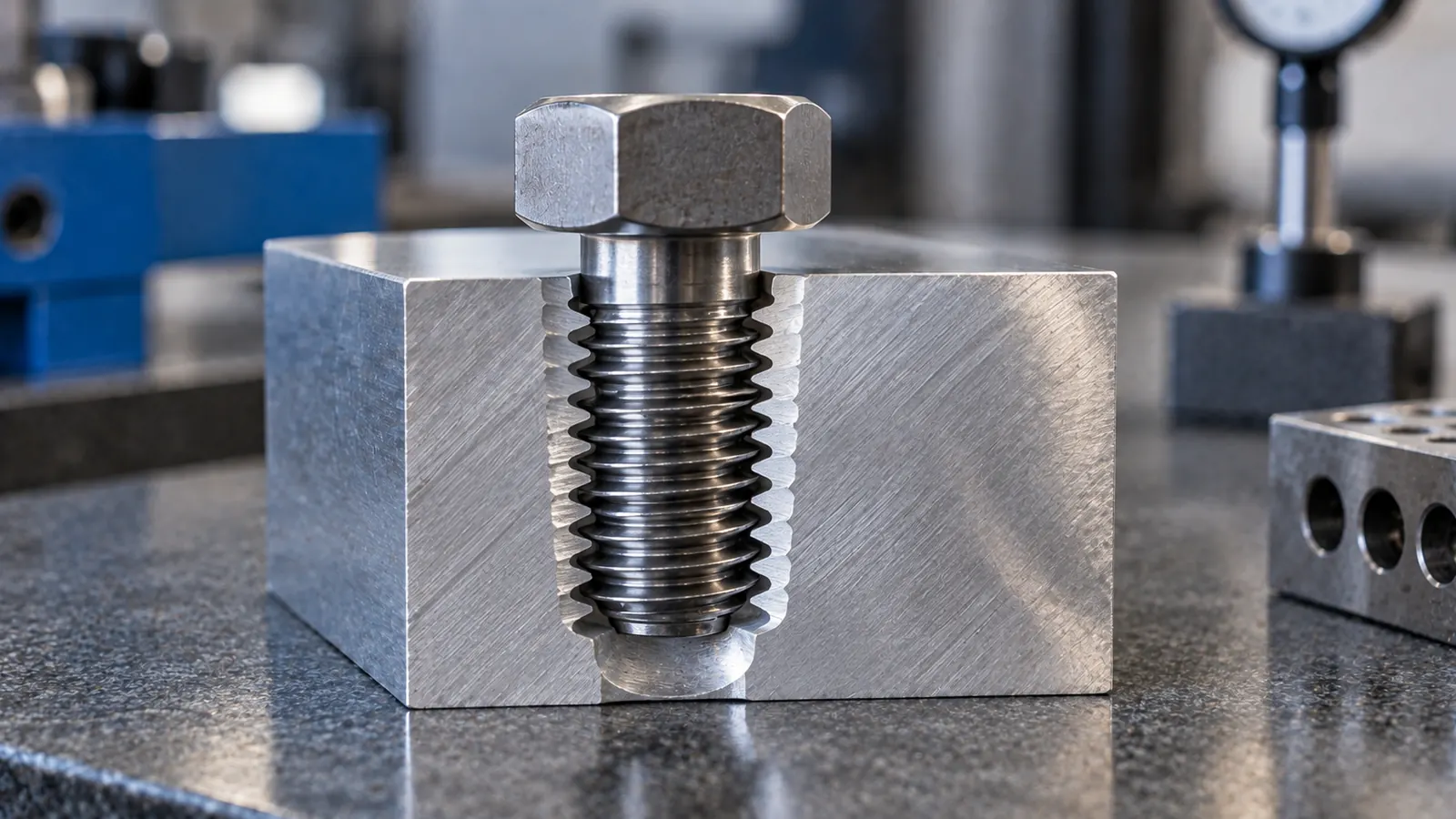 Thread engagement length: how much thread you needThe thread engagement rule of thumb is a full-thread length of 1 × the bolt diameter in steel, 1.5 × D in cast iron, brass and bronze, and…
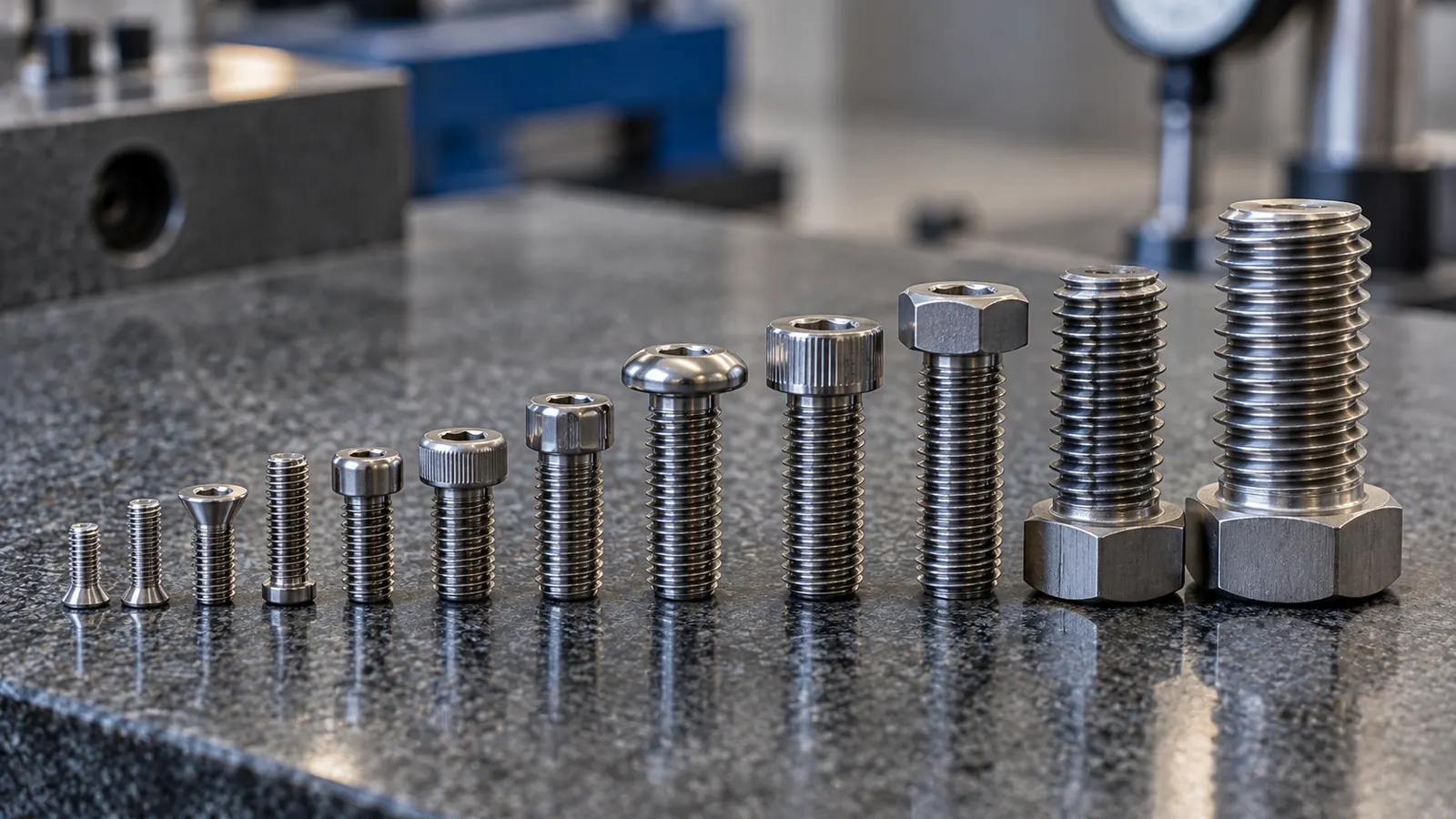 Screw size chart and thread pitch chartA screw size chart gives each thread's diameter and pitch. Number screws are 0.060 in + 0.013 in × the number, so #10 is 0.190 in. Metric…
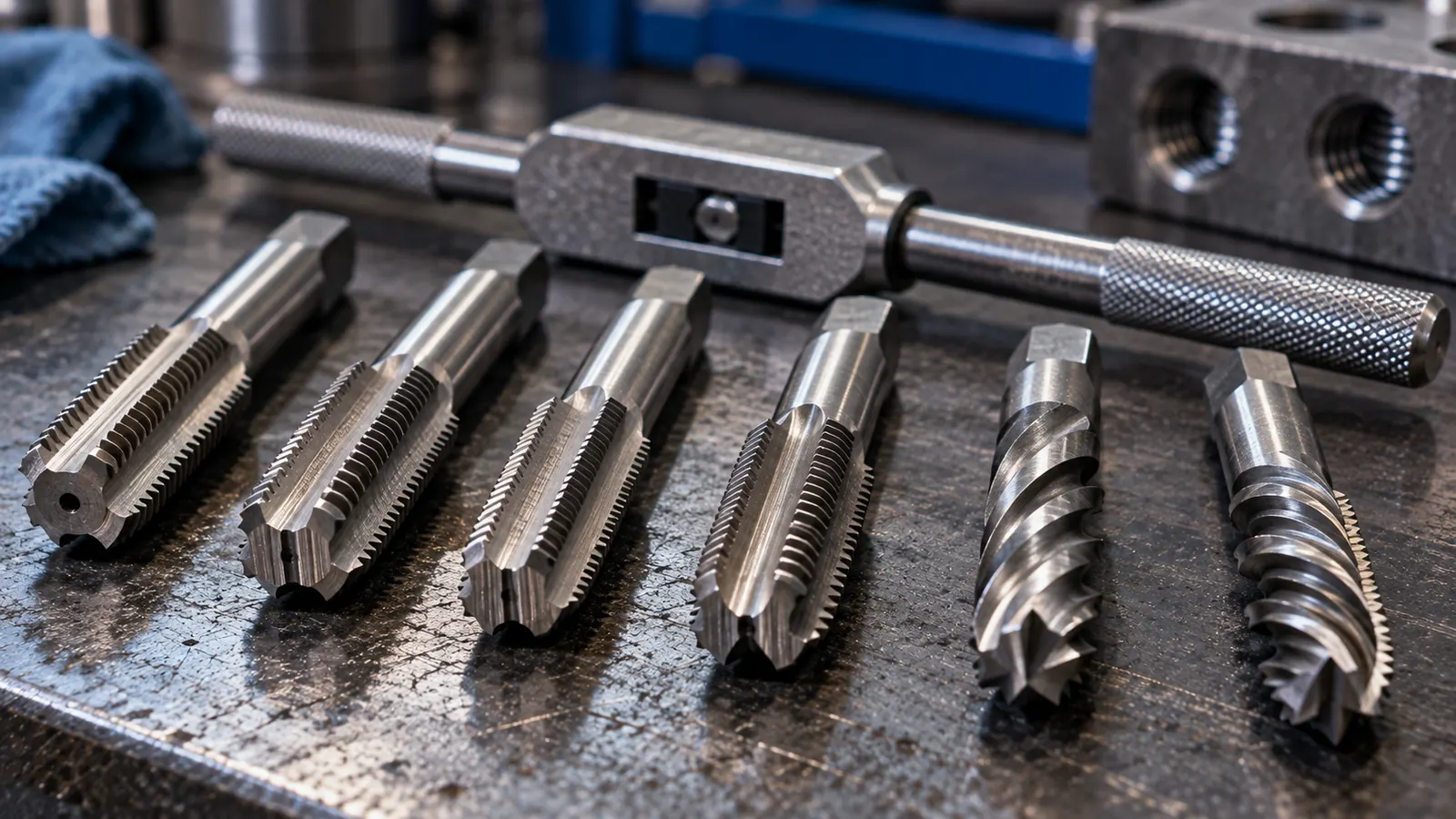 Types of taps and how to tap a holeThe main types of taps are taper (7 to 10 chamfered threads), plug (3 to 5) and bottoming (1 to 2). Spiral point taps push chips forward…
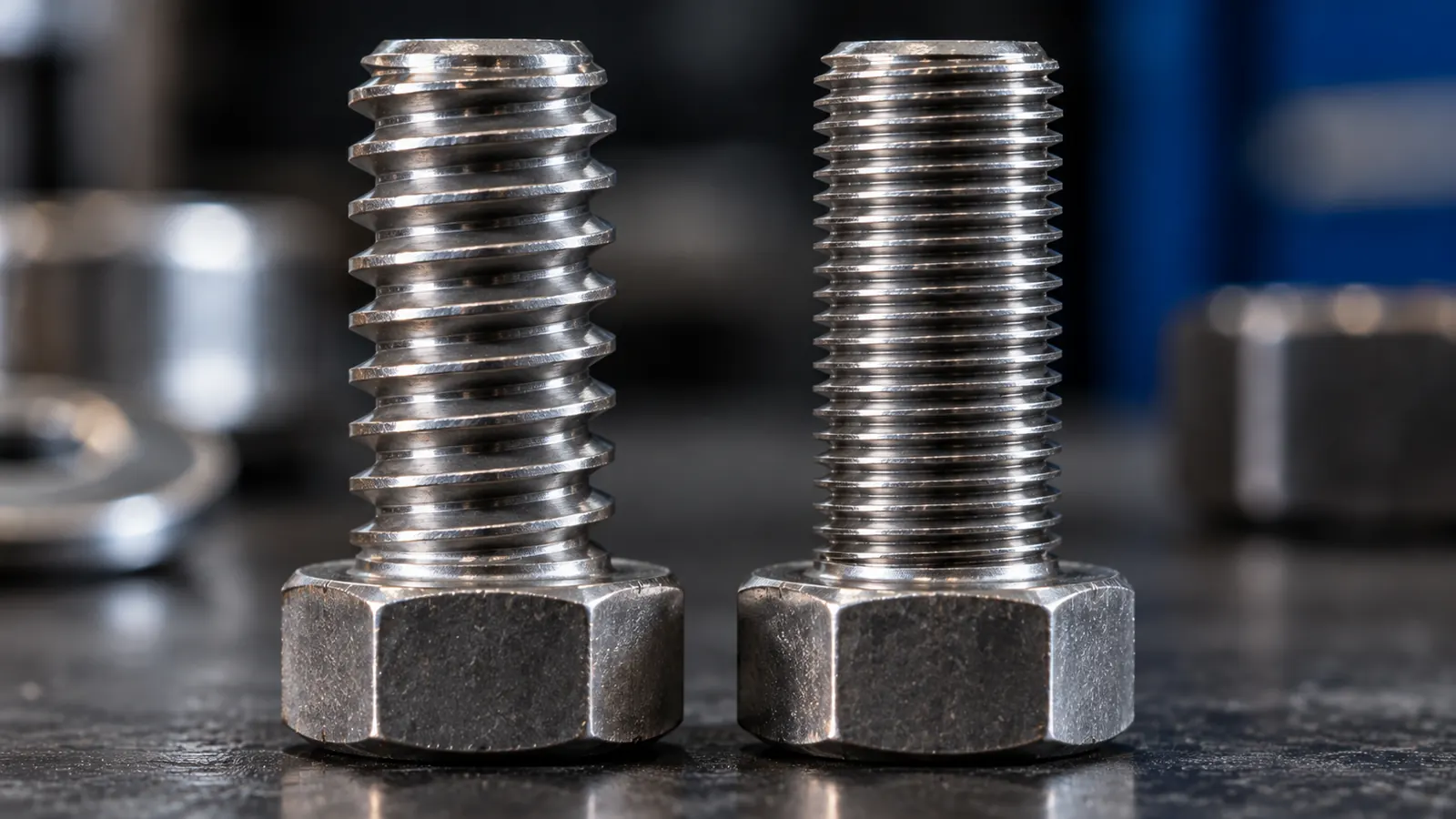 UNC vs UNF threads: coarse vs fineUNC is the Unified coarse thread series and UNF the fine series, both 60° threads defined in ASME B1.1. On the same diameter UNF has more…
Drills and holes
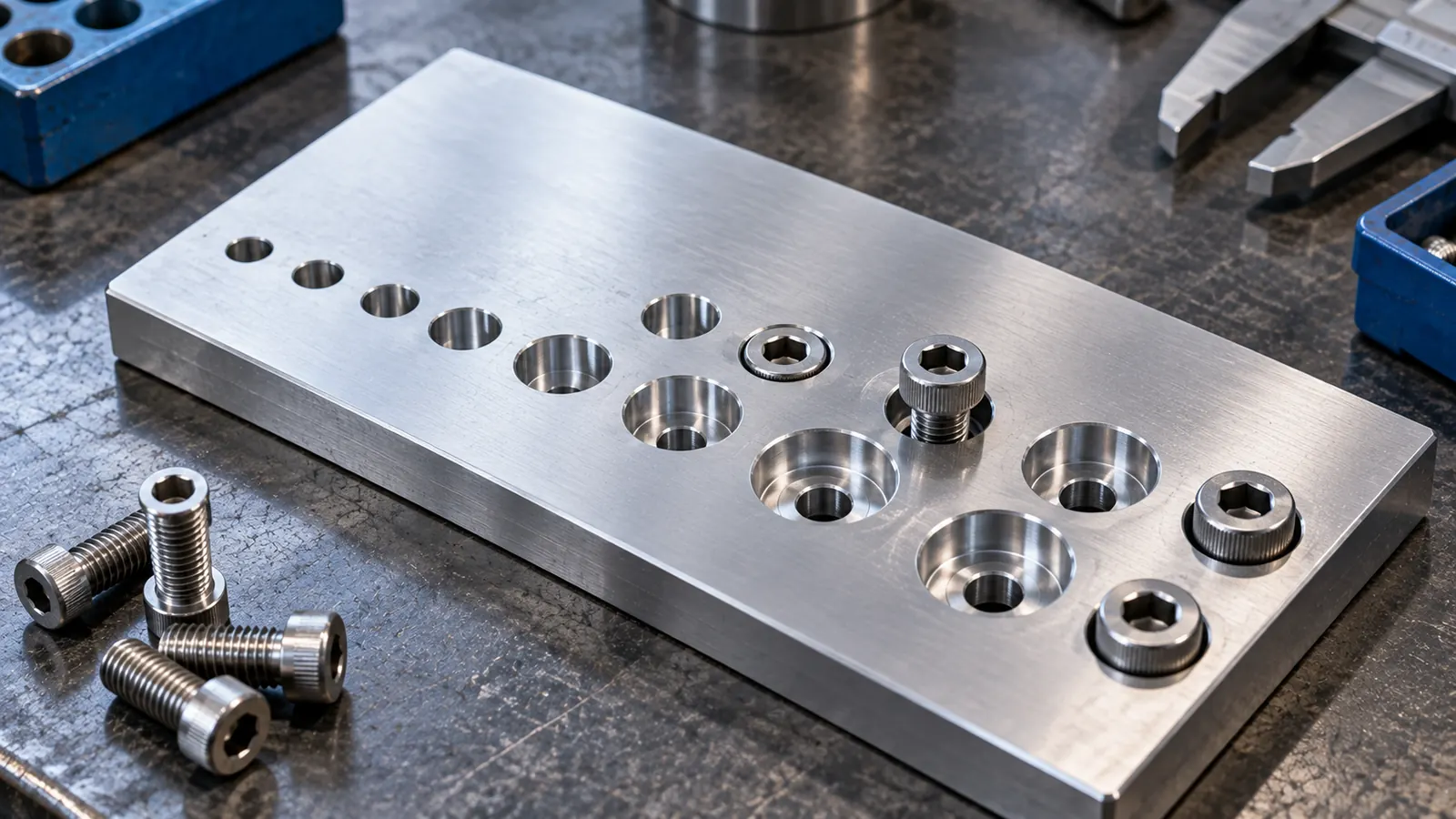 Clearance hole chart for metric and inch screwsA clearance hole is slightly larger than the screw so it passes through without threading. Per ISO 273, an M6 screw takes a 6.4 mm close,…
 Drill bits for metal: types, sizes and speedsFor most metal, use a high-speed steel (HSS) twist drill with a 135 degree split point; use cobalt (M35 or M42) for stainless and hard…
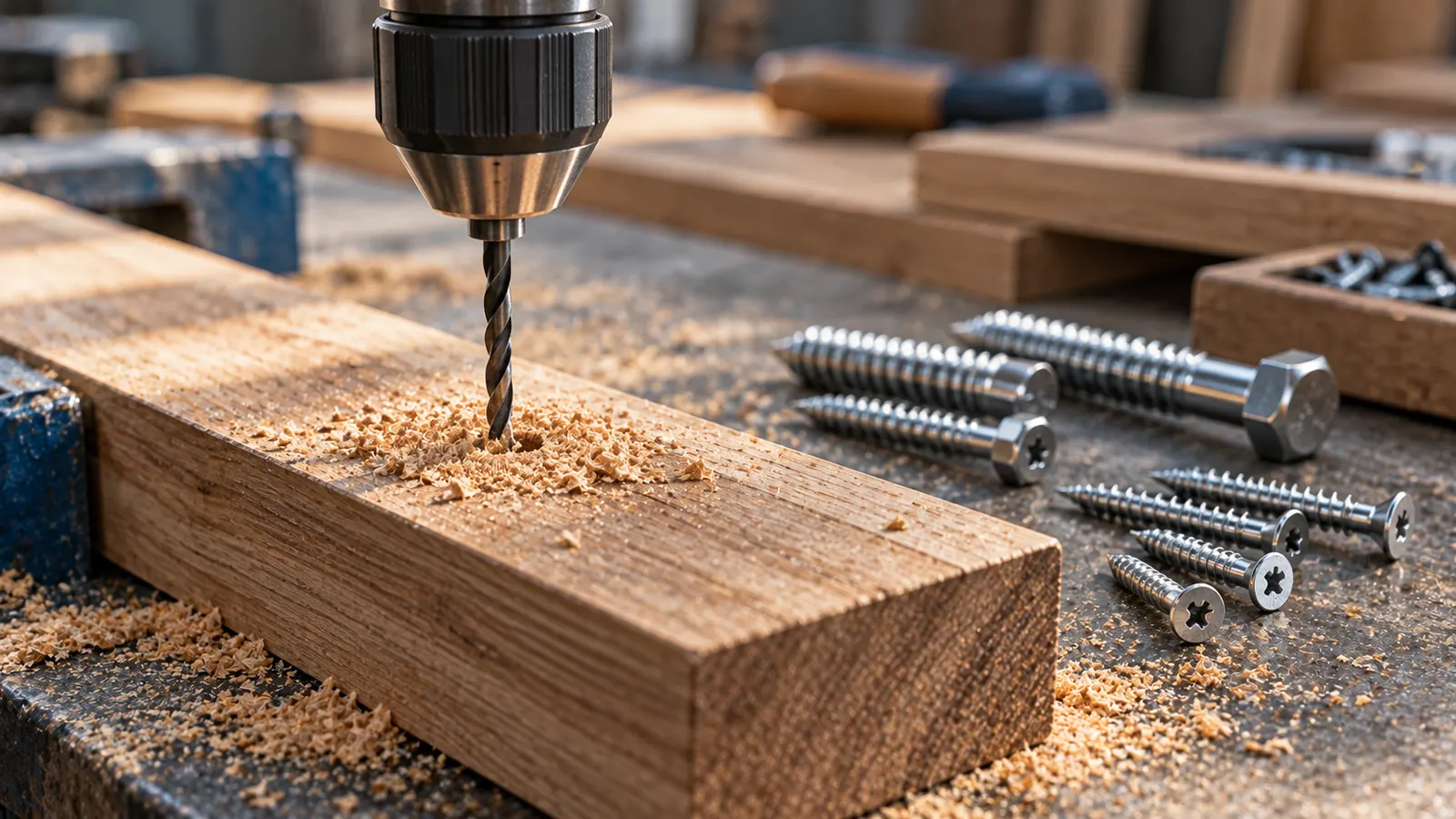 Pilot hole size chart for screws, lag bolts and rivetsA pilot hole should match the screw's root diameter: slightly smaller in softwood, equal in hardwood. For a #8 wood screw drill 7/64 in in…
Bearings
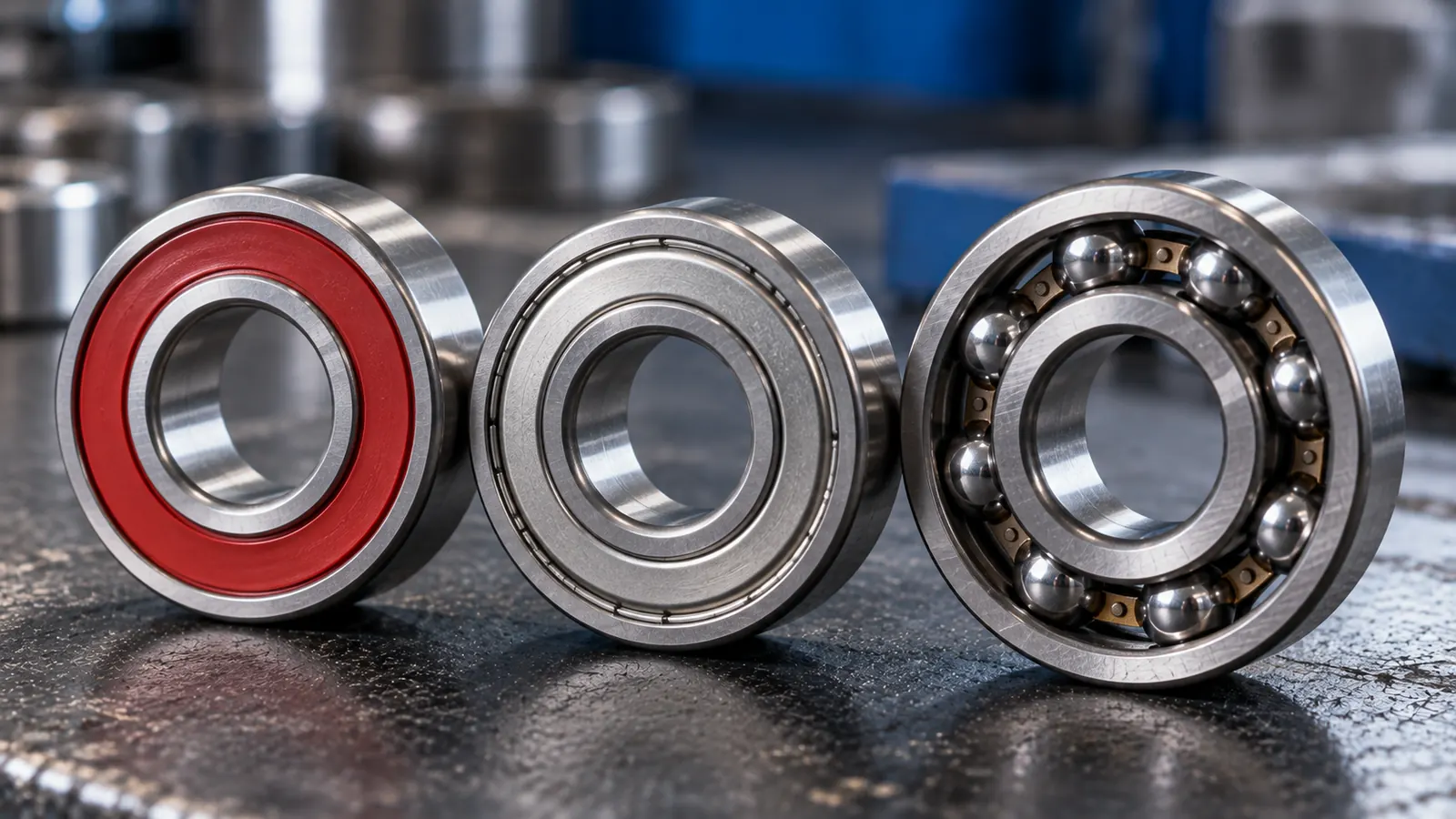 2RS vs ZZ: sealed bearings vs shielded bearings2RS sealed bearings have a rubber contact seal on each side that touches the inner ring, so they keep out water and fine dirt best but add…
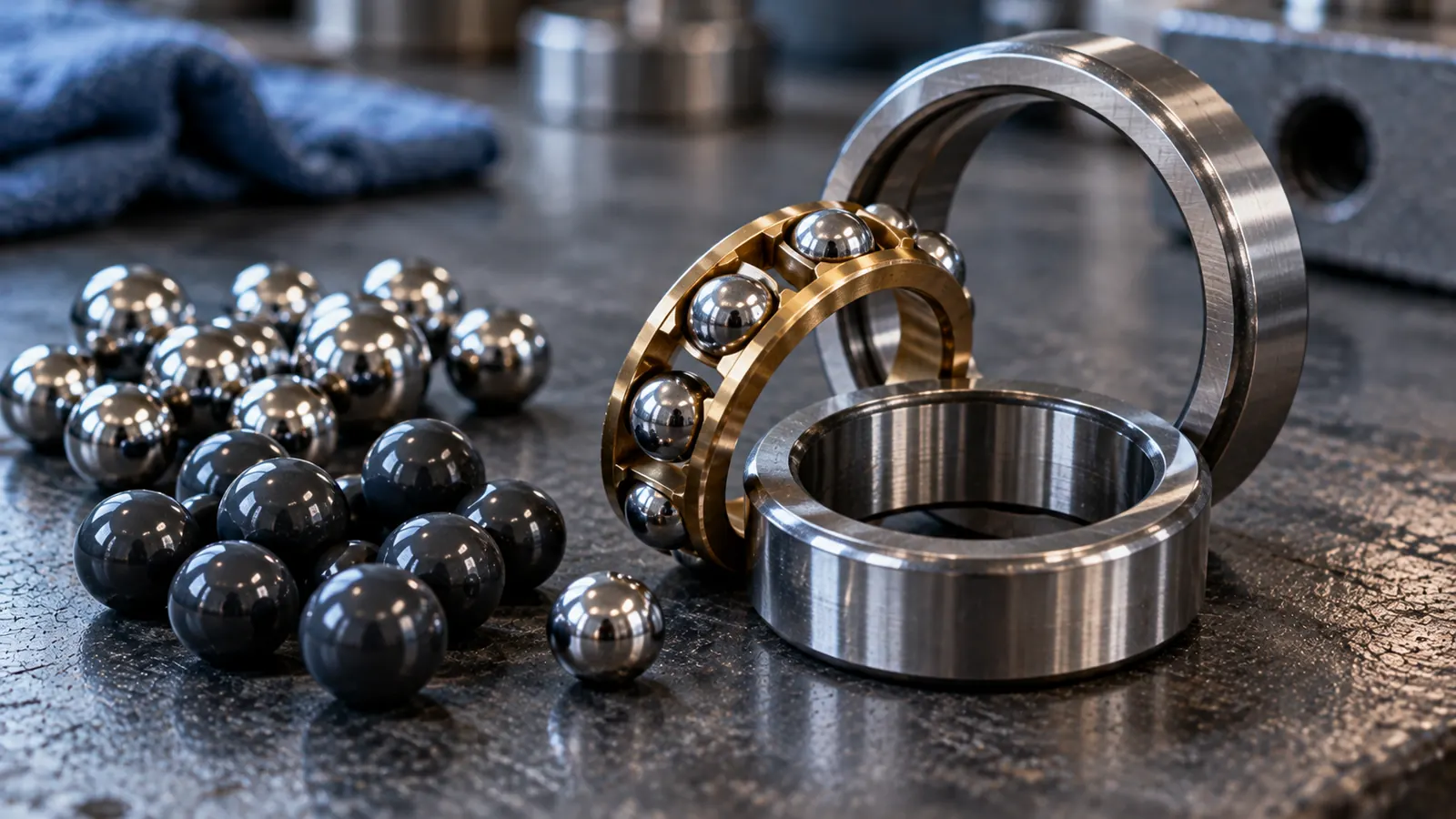 Ball bearing materials: chrome steel, stainless and ceramic bearingsMost ball bearings use 52100 chrome steel (100Cr6, SUJ2, GCr15) hardened to about 58–65 HRC. Stainless steel bearings use 440C for…
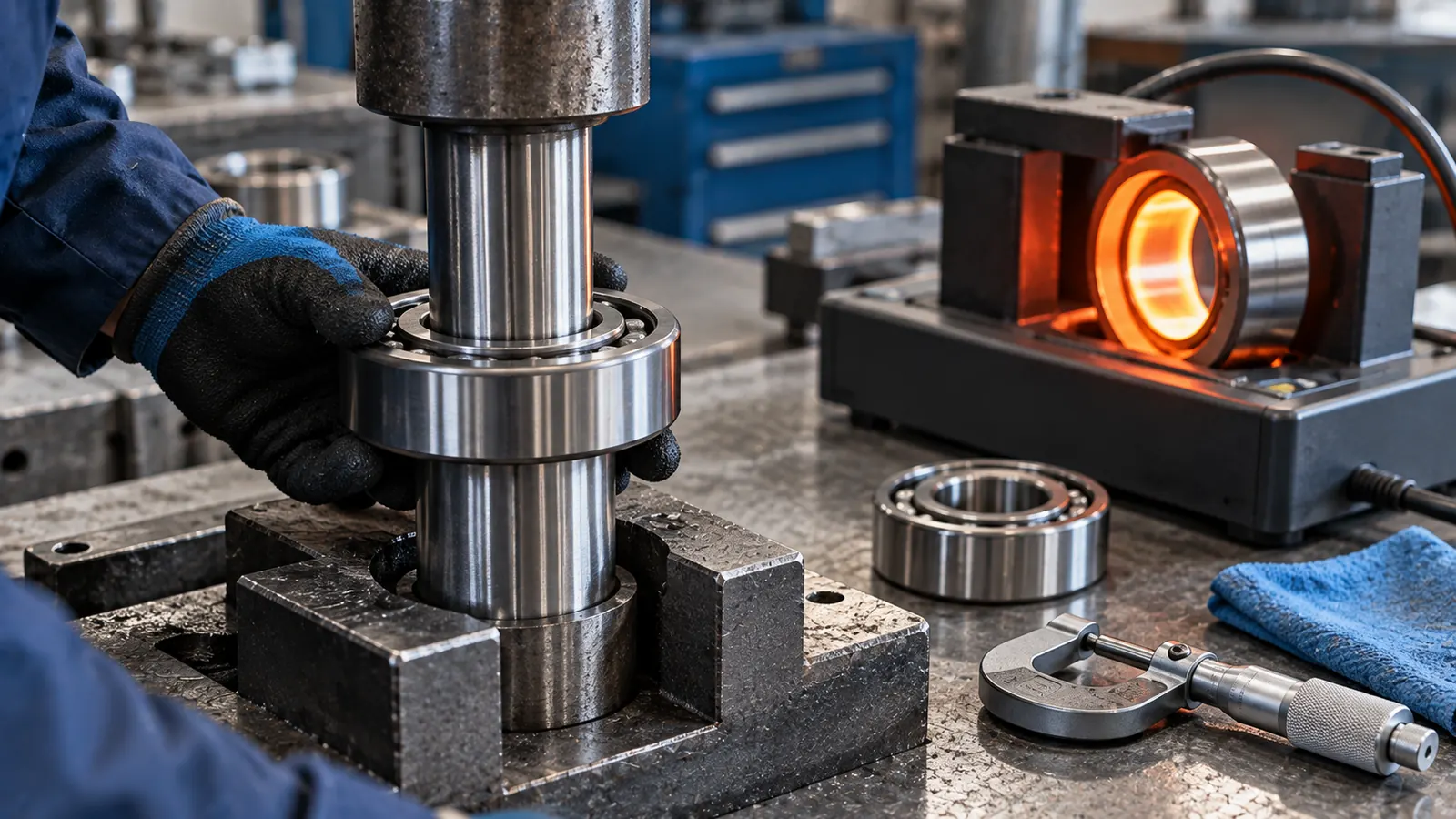 Bearing interference fit, press fit tolerances and internal clearanceA bearing interference fit goes on the ring that rotates relative to the load. For a rotating shaft, the inner ring is pressed on with a…
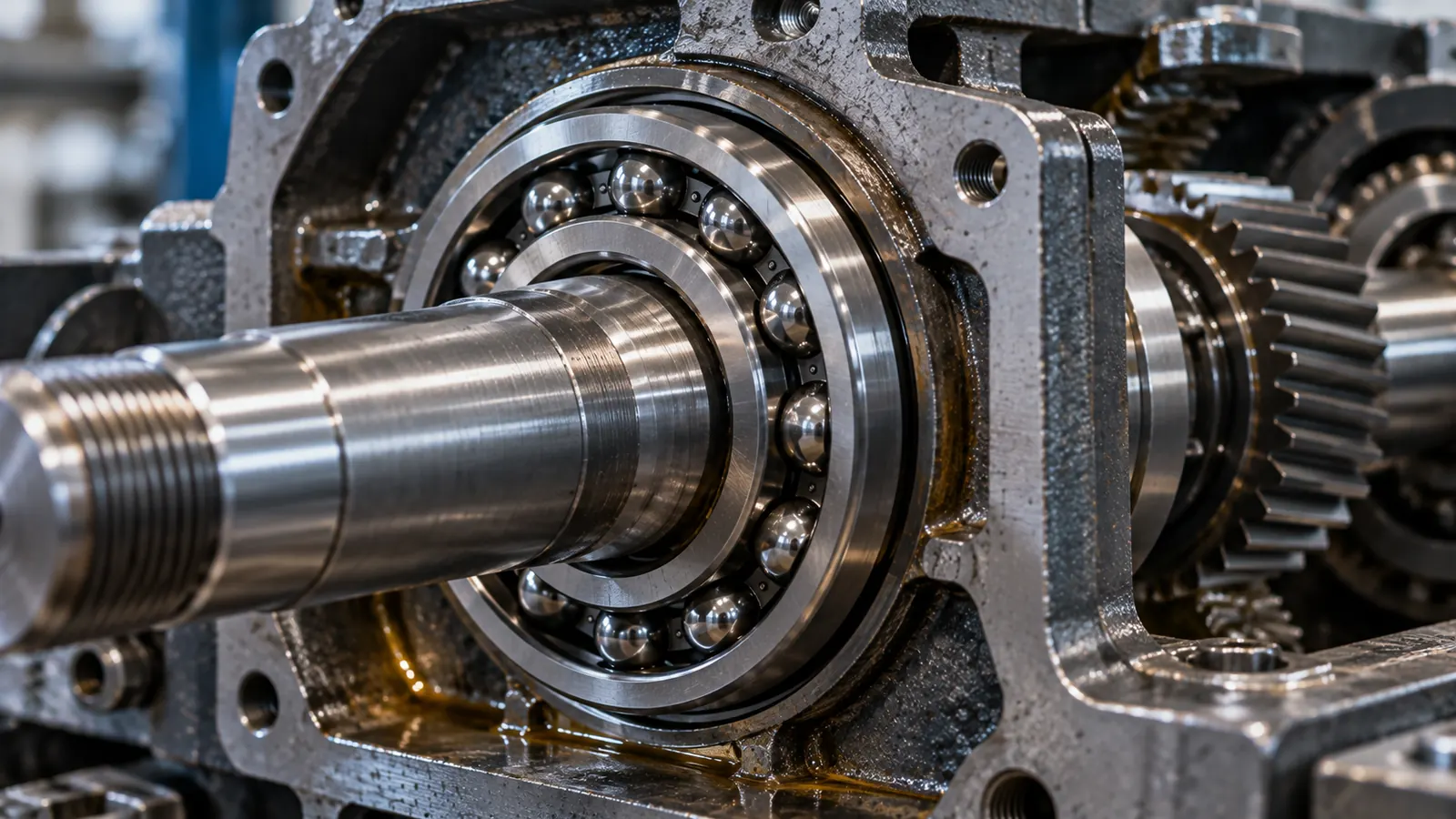 Static vs dynamic load ratings and bearing life calculationIn static vs dynamic load terms, a bearing's dynamic load rating C is the load it can carry for a rated life (L10) of one million…
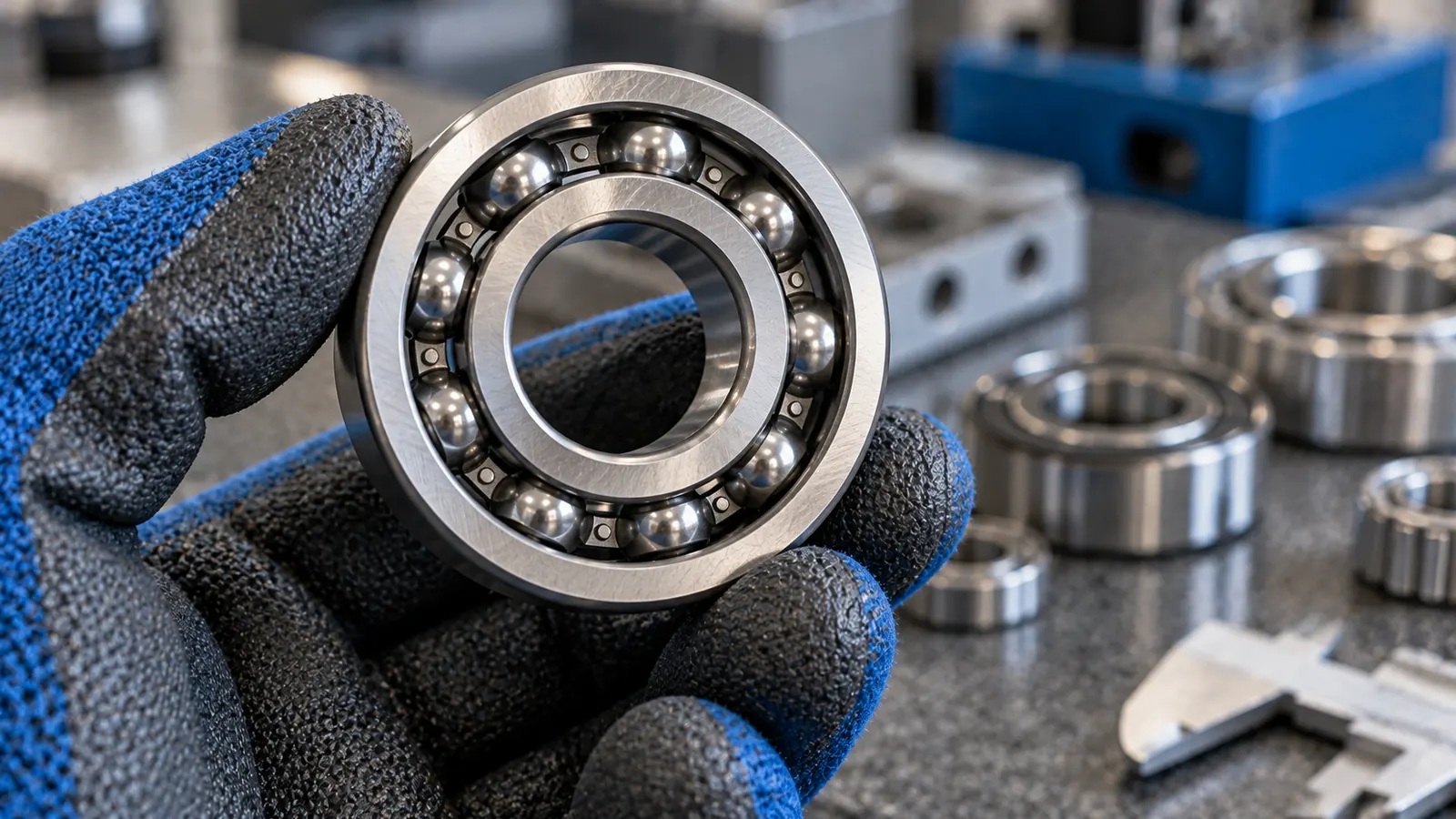 How to read bearing numbersHow to read bearing numbers: split the code into type, series and bore. In 6205-2RS, 6 means deep groove ball bearing, 2 is the light…
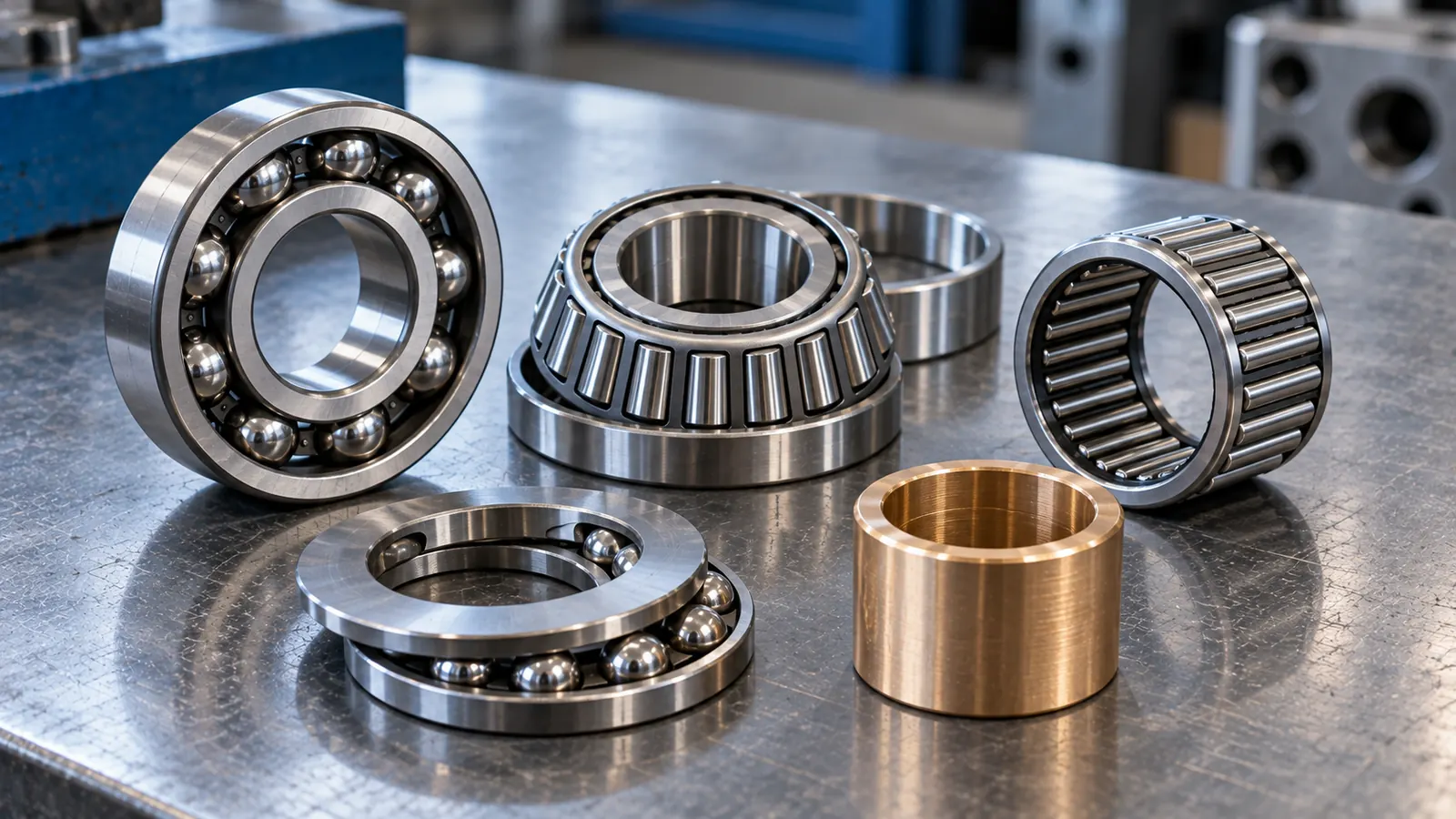 Types of bearings and the loads they carryThe main types of bearings are ball bearings (deep groove, angular contact, self-aligning, thrust), roller bearings (cylindrical, tapered,…
Steel and materials
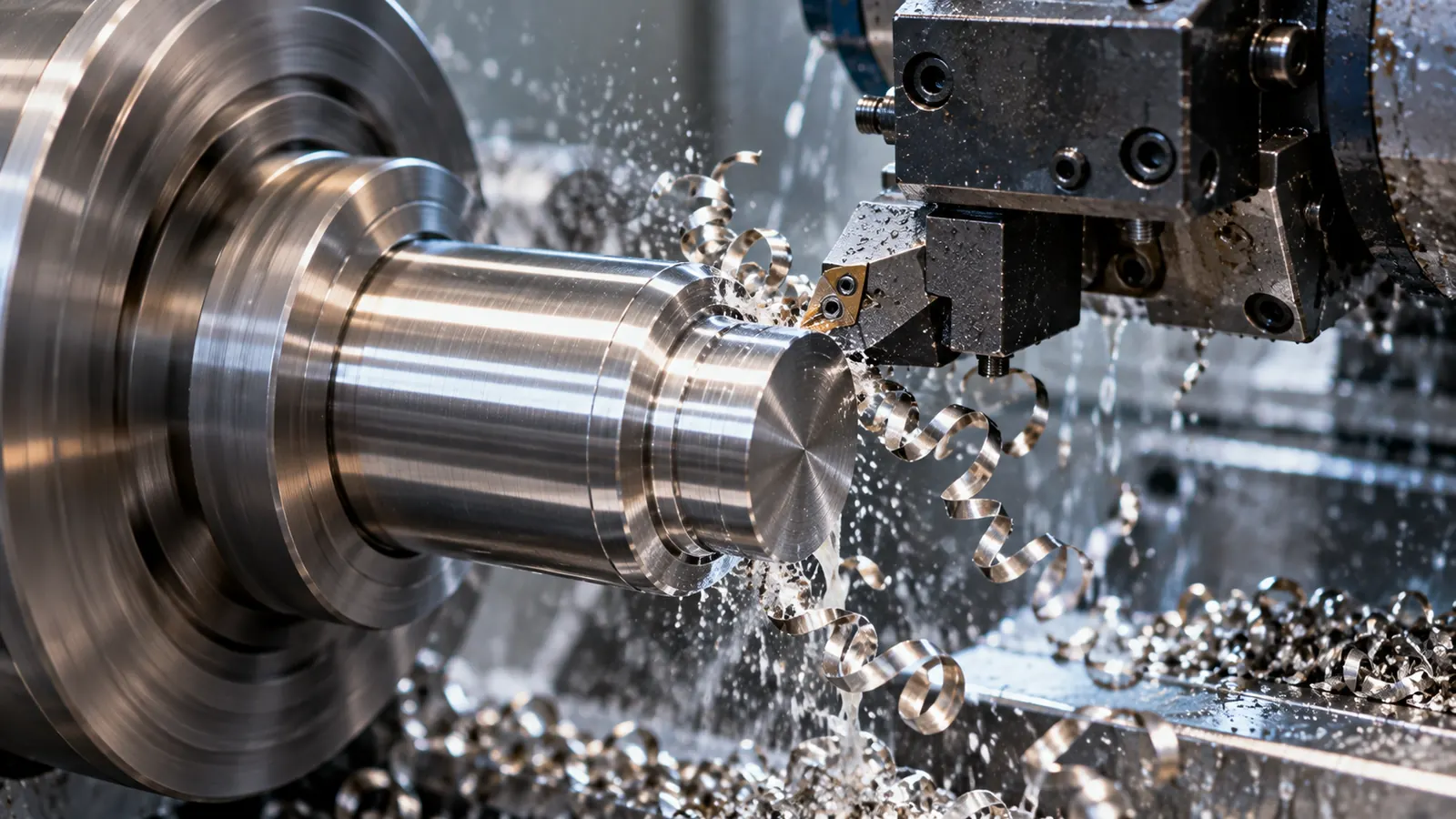 303 vs 304 stainless steel: machinability, corrosion and welding303 vs 304 stainless comes down to sulfur. 303 contains at least 0.15 % sulfur, which breaks chips and makes it the easiest austenitic…
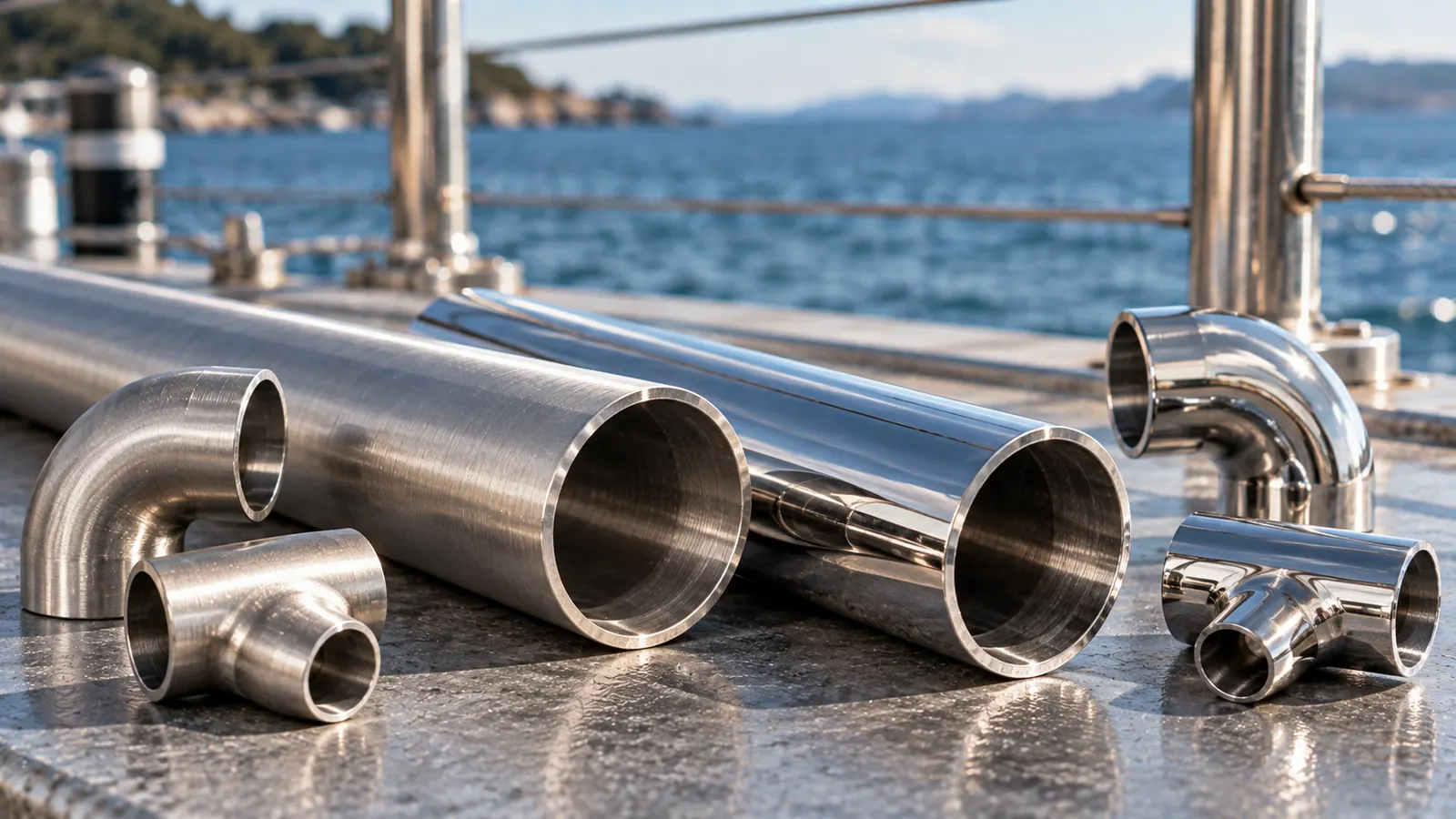 304 vs 316 stainless steel: differences, strength and usesThe difference between 304 and 316 stainless steel is 2–3 % molybdenum in 316, plus more nickel. Molybdenum raises the typical PREN from…
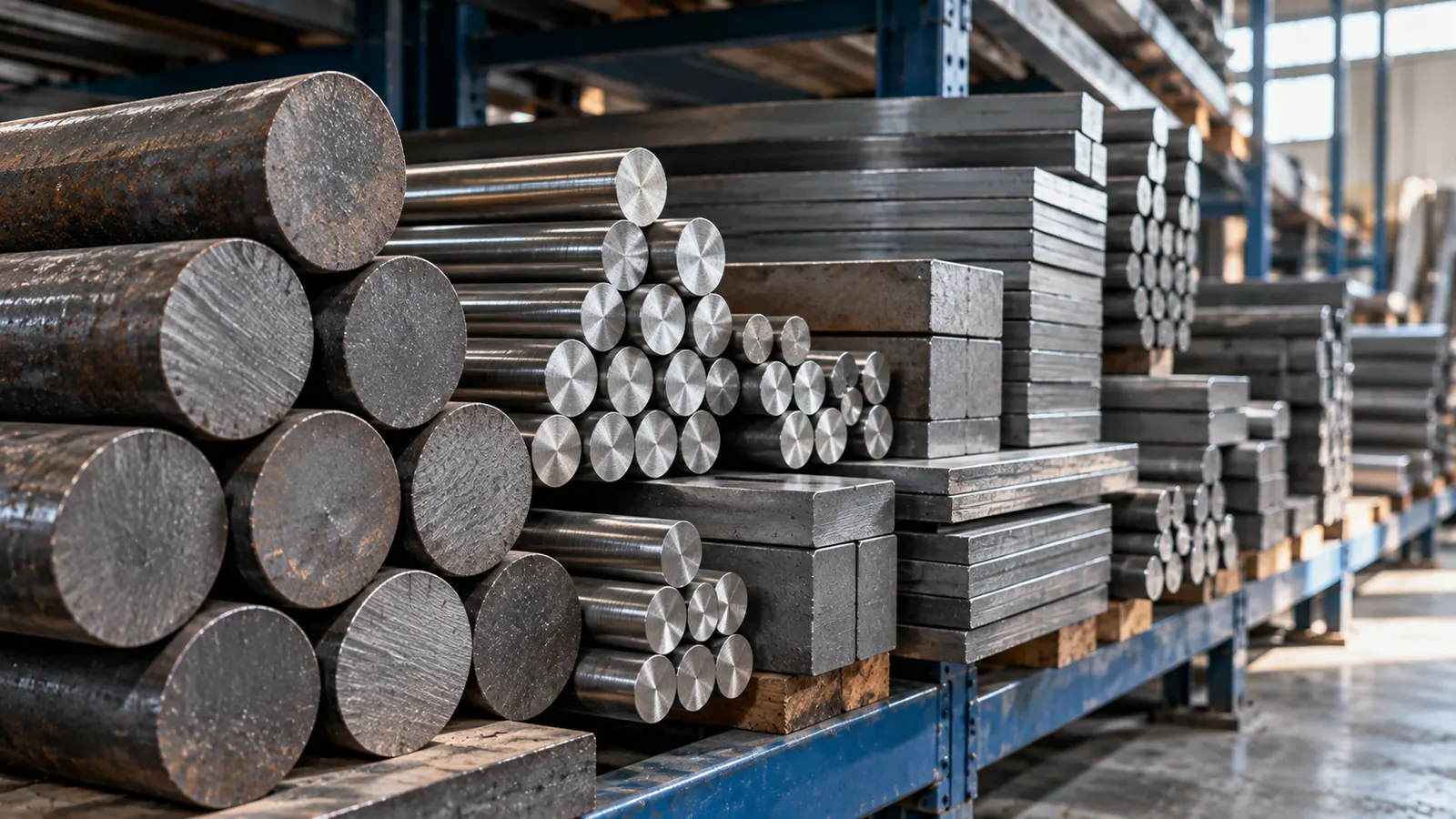 Carbon steel grades: types, numbering and common gradesCarbon steel grades use the SAE/AISI four-digit system: the first two digits give the family (10xx plain carbon, 11xx free-machining, 41xx…
 Does stainless steel rust? Why it happens and how to stop itYes, stainless steel does rust under some conditions. Its minimum 10.5 % chromium forms a passive oxide film that normally stops rust, but…
 4140 heat treatment: hardening, tempering and annealingTo heat treat 4140, austenitize at about 845–860 °C (1550–1575 °F), quench in oil and temper at once. Tempering at about 205 °C (400 °F)…
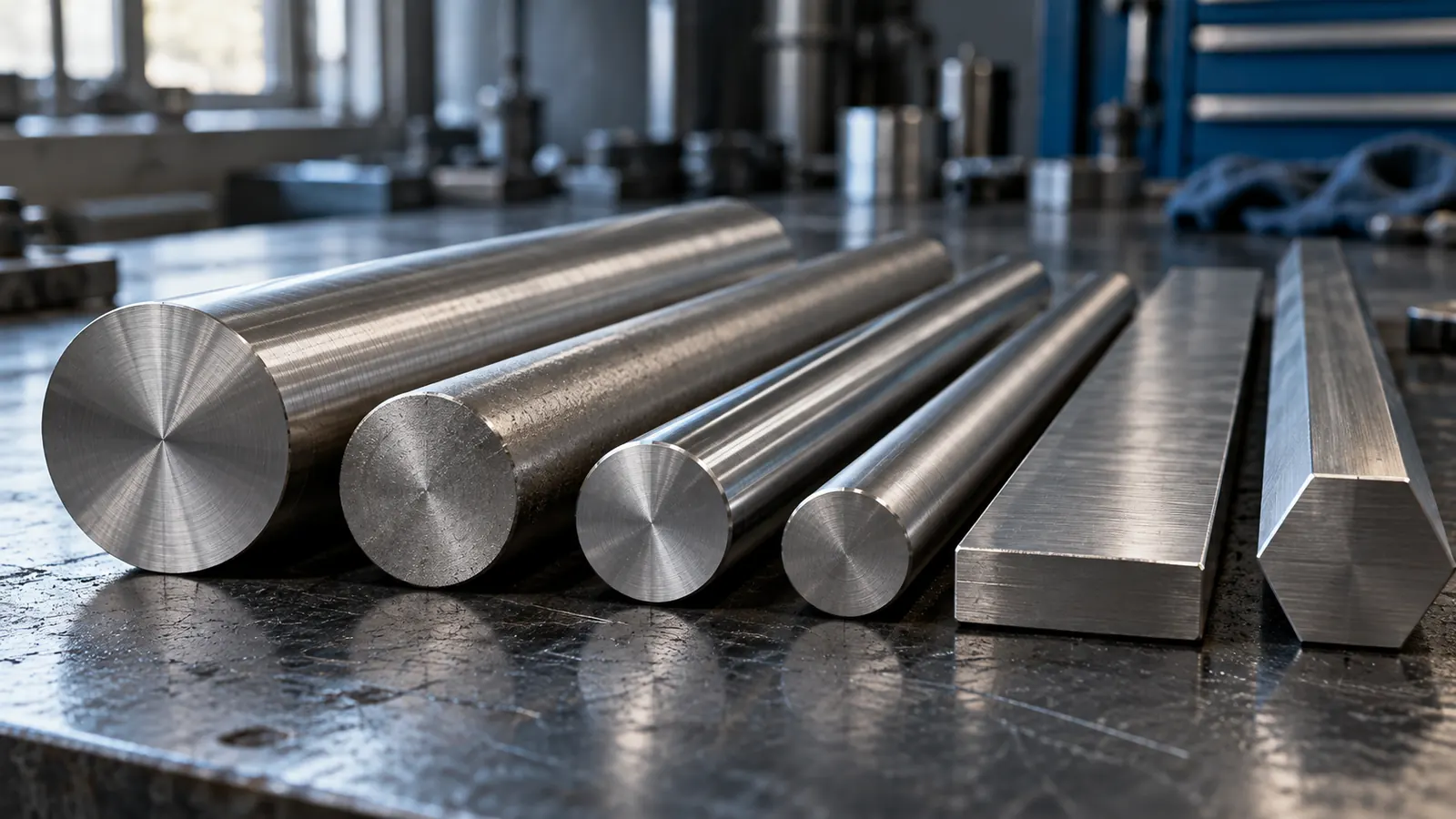 Stainless steel grades explained: types, families and usesStainless steel grades are iron alloys with at least 10.5 % chromium, which forms a self-healing oxide film. They fall into five families:…
 Steel hardness chart: Rockwell, Brinell and Vickers conversionA steel hardness chart converts between Rockwell C, Vickers and Brinell. Approximate values for carbon and alloy steel per ASTM E140: 20…
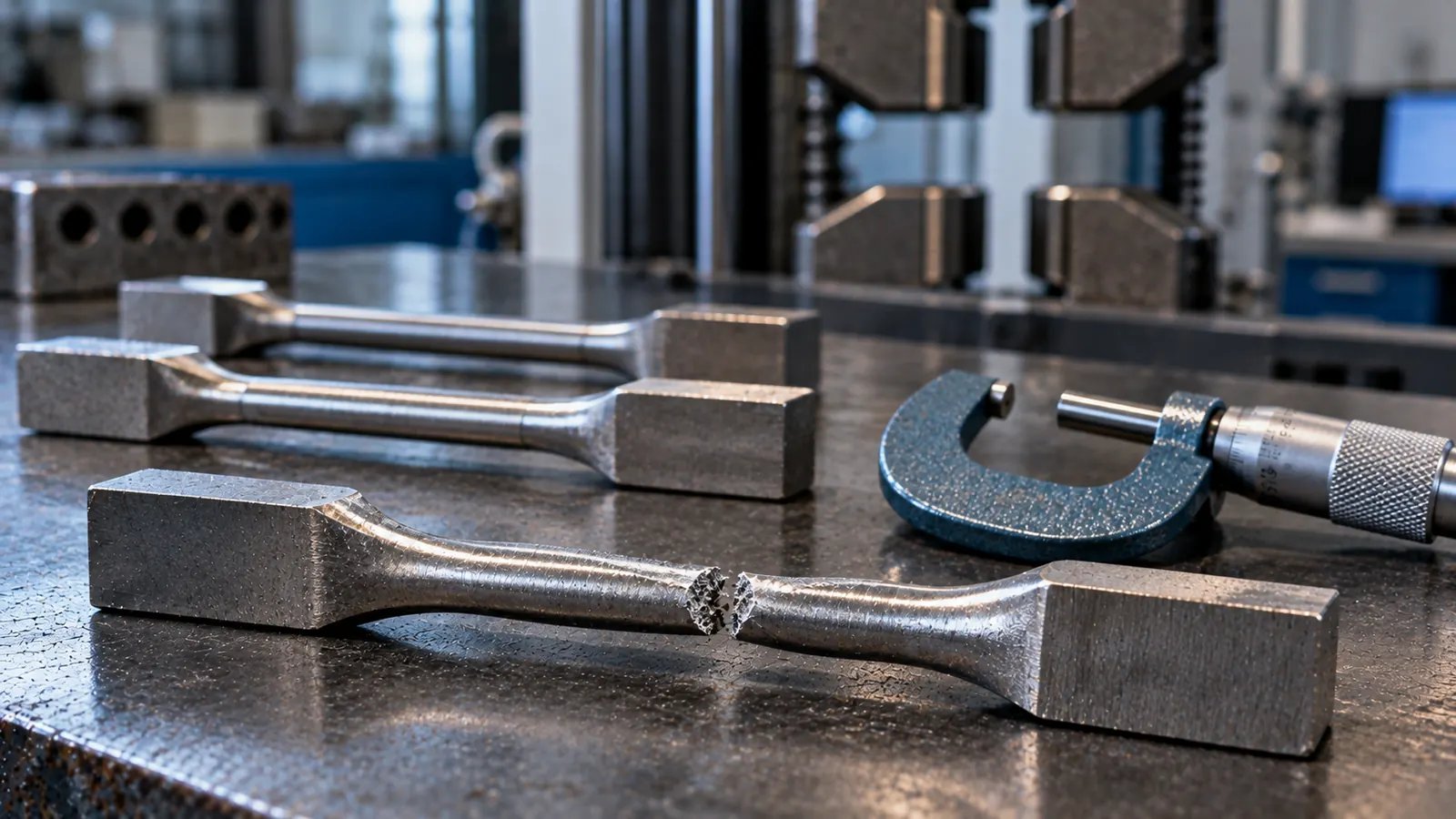 Steel properties chart: physical and mechanical propertiesTypical steel properties: carbon steel density 7.85 g/cm³ (0.284 lb/in³), Young's modulus 200–210 GPa (29–30 Msi), thermal expansion 11–13…
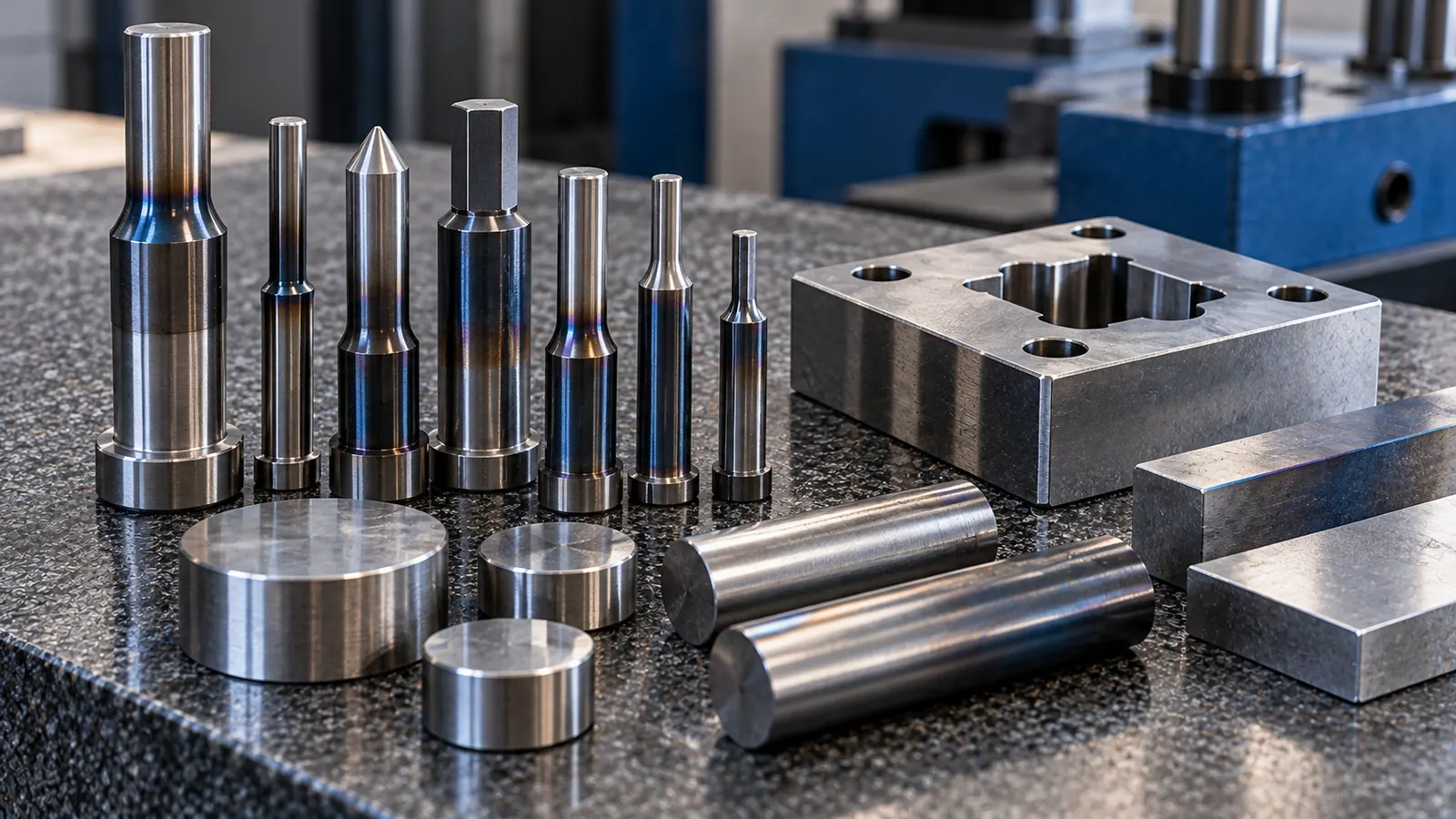 Tool steel grades: classes, common grades and hardnessTool steel grades are named by an AISI letter for the class and a number for the grade. W, O and A mean water, oil and air hardening; D is…